Quando vuoi fare un regalo e non hai un'idea precisa di cosa regalare, bisognerebbe donare un libro. Non c'è bisogno di una ricorrenza specifica: è sempre bello donare un libro. Veicola sempre un messaggio, un'idea, un sogno. Peccato che ogni volta che regalo un libro, il più delle volte la gente si incazzi...

If you want to make a gift and you have no idea about what to buy, well donating a book it's always a good choice. It's no necessary to wait for a specific occasion: it's always something good. A book materializes messages, ideas, dreams. Yet anytime I give a book as a gift in the majority of cases, people tend to get angry...

giovedì 20 gennaio 2011

Nalini M. Nadkarni "Tra la Terra ed il Cielo/Between Earth and Sky"

Il bel titolo di questo libro e soprattutto il suo sottotitolo ("La vita nascosta degli alberi") mi avevano fatto propendere per l'acquisto in libreria. Anche una rapida scorsa all'indice e una lettura fugace mi avevano abbastanza convinto. Purtroppo, ad una lettura più attenta, è risultato un libro un po' superficiale. Devo dire però che su questo argomento (intendo dire il mondo degli alberi) avevo tempo addietro letto la famosa "Mitologia degli alberi" di Brosse (libro che trovate commentato su questo blog) che rimane un'opera decisamente di livello superiore.

Nel libro si trova un po' di tutto quello che può interessare gli alberi: caratteristiche, simbologia (molto vaga), uso del legno. Ci sono molte poesie e ricordi personali (che però non sono particolarmente interessanti)

Forse chi non ha letto la "Mitologia degli alberi" potrà apprezzarlo meglio: io, ripeto, lo trovo superficiale. Comunque una lettura che può essere in qualche modo istruttiva per i giovani lettori.
___________

The beautiful title of this book (and his subtitle) has convinced me to buy this book. I have also read the index and after having read some paragraph I was definitively convinced. Unfortunately, after reading this book, I have found it rather superficial. I've got to say that about trees and their world I have read the famous "Mythologie des arbres" by Brosse (I have described in this blog) which is definitively at a very higher level.

Anyway in this "Between Earth adn Sky" one can find an overview about wood and trees: their characteristics, the use of wood, their symbolic value (extremely vague...), the relations between people and trees, and so on. Along the pages there are many poems and personal memories (actually not so interesting...)

Maybe, who has not read the Brosse's book may find this book interesting: I repeat, in my opinion it is superficial. However this is a potential useful reading for young readers.

lunedì 10 gennaio 2011

Pollan M. "Il dilemma dell'Onnivoro/The Omnivore's Dilemma"


Libro interessante e di grande attualità. Michael Pollan si chiede: cosa cavolo sto magiando? Dopo aver meditato sul delirante sistema alimentare americano (che ahimè ha contagiato tutte le agricolture dei Paesi che ironicamente si autodefiniscono "economie avanzate"), decide di darsi qualche risposta ricostruendo il persorso del cibo dal campo o dalla stalla al piatto.

Il risultato è particolarmente sconcertante: anche se connotato da un tono sempre ironico, l'autore delinea una denunica nitida dell'assurdità del nostro rapporto malato con il cibo.

Insomma un libro da leggere per costruire una consapevolezza sul nostro rapporto con ciò che mangiamo: da questo punto di vista può essere molto utile soprattutto per i giovani che sono le vittime principali del sistema "junk-food". La lettura è agevole e piacevole: da leggere...

______

This is a very interesting book. The author begins his reflections from a simple question: what am I eating? After some considerations about the irrational american food system (which actually must be extended to the agriculture in many western countries), the author tries to provide some answers to this question trying to reconstruct the history and the path of our everyday food from the field to the dish.

The result is quite astonishing: even if characterized by an ironc tone, this book is a clear report about the absurdity of our insane relation with food.

In brief, this is an useful book: it must be read also to reconstruct an awareness about the relations with what we everyday eat. This is thus an useful book about all for young readers who usually are the main victims of junk food.

giovedì 23 dicembre 2010

Christmas Suggestions

Just few days remaining before Christmas and the usual gift-nightmare has arrived. We are full of no-use objects. Our houses are crammed with things with which we don't know what to do. Christmas is thus the day in which you probably will receive the umpteenth useless gift.

For this reason, I exploit this terrible and very boring blog just to give a small suggestion: please give books as gifts for Christmas. Any kind of book is OK. Even if I can stand them, well you can give also cooking, cuisine or receipes' books. Photo books or an atlas are OK as well. There are so many beautiful editions with fantastic bindings which can make a wonderful impression in any private library.

I'm perfectly aware that nobody is reading this blog: anyway, dear reader, who just for a technical error is fallen in this stupid dissertation, you have to know that even here, in this boring blog, you may find some suggestion and a good book as a gift. There are enough books of any sort.

Similarly, I'm perfectly aware that there's nothing more difficult than the description of the face of who, deeply ignorant for deliberate choice-birth-faith, has just received a book as a gift when rather expecting a last generation mobile phone or any kind of technological gadget. How to say? It's a mix of hate and perplexity: maybe if you give him a pile of shit, he'd be happier...
Maybe, that book will be thrown away, used to light the fire in the chimney or as a wedge for a table. But it colud happen that someone, in that house, as hit by a sudden raptus, decides to take it, open it and, why not, also read it.

In this way sometime, as written in many books, an incredible adventure may begin...

Suggerimenti Natalizi

E' arrivato il Natale ed inizia il solito incubo dei regali. Siamo pieni e strapieni di cose inutili. Le nostre case (chi più o chi meno) traboccano di oggetti di cui il più delle volte non sappiamo che farcene. Il Natale diventa quindi il momento in cui tra capo e collo è quasi certo che ti arriverà l'ennesimo oggetto inutile.

Per questa ragione approfitto di questo scalcinato e tediosissimo blog per fare un piccolo invito: regalate dei libri. Qualsiasi tipo di libro va bene. Anche se non li sopporto e non li ho mai capiti, regalate anche dei libri di cucina. Libri di fotografie o atlanti: vanno bene lo stesso. Ci sono edizioni bellissime con delle splendide rilegature che fanno fare una discreta figura a qualsiasi libreria domestica: anche di chi i libri non li hai mai letti se non obtorto collo sui banchi di scuola.

So perfettamente che nessuno segue questo blog: tuttavia, caro lettore casuale che per mero errore informatico sei incappato in questa dissertazione, sappi che anche qui puoi trovare qualche suggerimento per fare un bel regalo. Di titoli ce ne sono abbastanza, di tanti generi diversi.

Allo stesso modo so perfettamente che non c'è niente di più difficile da esprimere a parole dell'espressione facciale di chi, anacoluto per nascita-scelta-fede, riceve in dono un libro quando si aspettava un telefonino o un altro gadget tecnologico. Si tratta di un misto di odio profondo e sconcerto: se gli metteste in mano un pezzo di merda sarebbero più contenti. Eppure, continuo a dire: regalate dei libri. Magari li mettono da parte, sotto la "zampa" del tavolino (come si diceva un tempo), qualcuno ci accende il camino; però potrebbe capitare che qualcuno in casa, come colto da un improvviso raptus o conversione magico-misterica degna di un paolo di tarso sulla via di Damasco, si degni di prenderlo in mano, sfogliarlo e magari leggerlo.

E così che talvolta, come è scritto del resto in tanti libri, che può iniziare una grande avventura...

mercoledì 22 dicembre 2010

Lewis R. "Il più grande uomo scimmia del Pleistocene/The Evolution Man


Un libro cult di alcuni decenni fa. L'ho letto perchè è spesso citato come modello di humor intelligente. A me è sembrato un po' datato e francamente un po' stupidino. Comunque è una lettura leggera, anzi, leggerissima che non fa male: direi che è un libro innocuo. A me non ha fatto ridere per niente comunque non è malaccio...

Si tratta delle vicende grottesche (è proprio il caso di dirlo) di una tribù di uomini primitivi cui l'autore mette in bocca (cosa che andava tanto di moda negli anni '60...) un frasario scientifico filosofico molto accademico. Il tutto appare molto intelligente...

Insomma si tratta di un libro che consiglio soprattutto ai ragazzi e alle ragazze o a chi non si vuole impegnare più di tanto nella lettura del classico "mattone": per tutti gli altri tipi di lettore, direi che si tratta di un discreto diversivo. Può essere una buona idea regalo per il Natale (salvo che l'anacoluto di turno non ve lo tiri dietro...)
___________________

Some decades ago, this book was considered a sort of cult-opera. I have read it for this reason: it is cited often as an example of intelligent humor. In my opinion it is rather out of date and sometimes silly. Anyway, it is a "soft reading": it is an inoffensive book. Actually it has been quite difficult for me to smile while reading the adventures of a clan of primitive men: but I have to admit it's not so bad...

I suggest the reading of this book above all to young readers or to who wants to read a not-so-difficult book. For more exigent readers, this is a distraction reading.

By the way, it could be a good gift for Christmas (unless the usual anacoluthon won't throw it back to you...)

lunedì 13 dicembre 2010

Peyer H.: "Viaggiare nel medioevo, dall'ospitalità alla locanda/Von der Gastfreundschaft zum Gasthaus"


Questo interessante saggio affronta un tema molto particolare e piuttosto specifico. Non affronta infatti un generico "viaggiare" nel medioevo, ma le modalità con le quali avveniva il particolare rapporto di ospitalità. Vengono analizzate le varie peculiarità nazionali e le varie forme: taverne, ostelli, ospitalità gratuita, ospitalità riservata ai potenti, mescite di vino e birre, mercati, conventi, ecc...

Insomma si tratta di un saggio "storico" abbastanza tecnico e, in alcuni momenti, capace di richiedere un certo impegno. Di certo non è un libro affascinante di per sè: tuttavia è una lettura che può risultare molto utile. C'è molto, anzi moltissimo, che si potrebbe riscoprire nelle tecniche e modalità di ospitalità medievali: questo anche per chi intendesse, perchè no, intraprendere un'attività turistica di piccola scala legata a forme di ospitalità medievale. Con tutti i borghi e paesi in Italia che mantengono ancora una forte impronta medievale, ci sarebbe da sbizzarrirsi.

E poi emerge il diverso significato fra turismo e viaggio: il viaggiatore non è un turista. Bisognerebbe, anche in questo caso, riscoprire il valore ed il sapore del viaggio e la diversa etica e concezione di ospitalità ad esso legato. Anche per questo aspetto, questo libro merita la lettura.

______________________________

This very interesting book analyzes a rather specific and particular issue. It is devoted in fact to the different modalities connotating the relationship of "hospitality". Examining the various national differences, the author describes the characteristics of tabernae, inns, hostels, pilgrims' hospitals and so on in the Middle Age. This is a history essay which in some parts may require some effort in the reading. Probably, to many readers, this book may appear not so fascinating per sè: nonetheless its reading may become very useful. In my opinion, in this book there is so much to learn to rediscover many expressions of medieval hospitality. It could be useful for example to whom decides to be engaged in some small scale entrapreneurial activity linked to tourism. There are so many villages in Italy still showing their medieval heritage where to do this. In addition this book highlights the great difference between tourism and travelling: it could be useful to rediscover the taste and the value of travelling and the different ethics connected to it. Also for this reason, I may suggest the reading of this interesting book. PS: I have found only the italian and german version of this book. I don't know actually if an english version exists. Any indication is thus welcome.

venerdì 10 dicembre 2010

R. Calasso: "Le nozze di Cadmo e Armonia/The Marriage of Cadmus and Harmony


Si tratta di un libro decisamente molto bello, ma piuttosto difficile da leggere. Di certo non ci troviamo di fronte ad un romanzo con una trama da seguire: i protagonisti sono gli Dei, le Dee e gli eroi che si muovo dentro il mito ed il suo specifico linguaggio.

Insomma questo è un saggio che raccoglie molto "sapere tradizionale" che si snoda in una melodia che appartiene al dominio della poesia. E' un libro da leggere, ma ci vuole preparazione e predisposizione. Astenersi incapaci, impreparati e perditempo.

_________________________
This is a very good book, but it is rather difficult to read. This book in fact doesn't tell a story but it tells the Stories of Gods, Goddesses and heroes within their myths and their specific myth language.

This is an essay encompassing a lot of "traditional classical knowledge" articulated in a melody rather belonging to poetry dominion. I suggest its reading but it is necessary some "expertize" and disposition. Absolutely not suitable for incapable and superficial readers.

venerdì 26 novembre 2010

U. Tellkamp: "La Torre/The Tower"


Questo libro è stato molto osannato dalla critica. E' stato considerato una sorta di grande opera in stile Thomas Mann.

Il focus del libro è la storia di vite personali e famigliari che si snodano sullo sfondo di una Dresda degli anni della Repubblica Democratica Tedesca, con le sue contraddizioni ed i suoi problemi della vita quotidiana. La storia si allunga fino al 1989 quando la RDT imboccò la via della riunificazione con la Germania Ovest.

Devo dire che è decisamente un buon libro, ma non mi è sembrato il capolavoro descritto dalla critica. Certo bisogna armarsi di coraggio per leggere le oltre 1200 pagine che costituiscono il libro. Però, che dire? Evabbè, si può leggere... Perchè no?!?

__________________________

This book has been very positively reviewed by the critics at international level. It has been considered a great Thomas Mass style work. The focal point of the book are the familiar and personal stories of the people of the Tower living in Dresden during the times of the German Democratic Republic. Everyday lifes, contradictions and problems in the GDR until 1989...

I have to say that this is a very good book but, in my opinion, it is not a masterpiece as depicted by the critics. Of course, it is necessary a good dose of courage to read more than 1200 pages: but what can I say? You can read it if you wish... Why not?

giovedì 4 novembre 2010

J. Potocki: "Manoscritto trovato a Saragozza/The Saragossa Manuscript"


Un libro decisamente particolare che sembra la descrizione di un sogno (e nemmeno di quelli semplici). L'atmosfera onirica infatti è accompagnata da visioni quasi misteriose, ambientazioni irreali, personaggi circondati da un alone di magia e chi più ne ha più ne metta.

Difficile classificare questa opera: un romanzo fantastico, un'allegoria, un misto di noir e astrazione filosofica. Il libro rimane comunque estremamente affascinante. La lettura è sempre gradevole.

Comunque consiglio la lettura a tutti gli appassionati di atmosfere surreali, misteriose ed oniriche.

_________________

A definitively peculiar book which seems the description of a dream.

The oniric climax is accompanied by mistery visions, not-real scenarios, magic figures and characters and so on.
In my opinion classifying this book is a rather difficult task: a fantasy tale, an allegory, a mix of noire and philosophical abstraction.

This book however remains a fascinating reading.
I suggest the reading of this book to all readers in particular those surreal settings and mistery lovers.

martedì 19 ottobre 2010

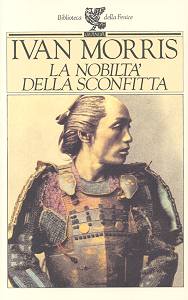
I. Morris "La Nobiltà della Sconfitta/The Nobility of Failure

Ci troviamo di fronte ad un libro molto interessante ed istruttivo sotto molti punti di vista. L'autore, attraverso la narrazione storica delle gesta di alcuni importanti guerrieri, samurai e personaggi storici del Giappone, ci descrive come viene vissuta l'idea di "sconfitta" secondo l'etica giapponese (perlomeno quella antica). In particolare la sconfitta, come risultato di una scelta consapevole fatta in coerenza con i propri principi etici ed i propri ideali, diventa un momento non necessariamente negativo, ma quasi di esempio di nobiltà di carattere e di vero eroismo.

Il libro si presenta quindi come un trattato storico-biografico e quasi antropologico. In particolare per noi italiani che viviamo in questi anni fatti di inganni, truffe e sotterfugi questo libro apporta una lezione peculiare: l'importanza cioè di lottare per i propri ideali e crederci fino alla fine. Insomma un libro di grande attualità.

Interessantissimo ed appassionante l'ultimo capitolo dedicato ai piloti kamikaze.

Lettura consigliata a tutti i tipi di lettori, anche se, comunque, il tema trattato implica un certo impegno.
__________________________

This is a very interesting book according to several points of view. The author, through the historic discussion about some Japanese warriors, samurai and other historic figures, describes how the idea of failure is embedded within the Japanese ethics. In particular failure is described as an aware and deliberate choice made coherently to personal values and principles: in this case failure is not something negative and disruptive but an example of nobility and real heroism.

This is an historical and antropological book: nonetheless for we italians there is also an important lesson to learn. In these material years of cheats, bribes, cynicism we can find some examples about the importance to fight for an ideal and ethical values.

The last chapter, devoted to kamikaze pilots in the 2nd World War, in my opinion is extremely interesting.

I thus suggest this book for all kind of readers even if the issues described are not always easy.

mercoledì 6 ottobre 2010

M. Bulgakov: "Il Maestro e Margherita/The Master and Margarita""


Un romanzo straordinario per la sua particolarità ed originalità. Un grande classico della letteratura russa che, considerato che è stato scritto negli anni trenta, appare di una modernità notevole. Si tratta in pratica di un complesso intreccio di storie parallele e piani e spazi temporali che si avvicendano. L'arrivo di Satana a Mosca... Impareggiabile la figura di Ponzio Pilato e il'interrogatorio a Gesù...

Insomma un libro assolutamente da leggere e da conservare nella propria libreria. Consigliato a tutti.
___________________________

An extraordinary book for its originality and peculiarity. A great masterpiece in the russian literature. Considering that it has been written in the 30s' it is likely to be particularly modern and still fascinating. It describes a complex network of parallel stories disposed on parallel space and time dimensions.

The arrival of Satan in Moscow... The extraordinary description of Pontius Pilatus and the interrogation to Jesus... Simply outstanding.


This book is a must for a passionate reader and a necessary component of a decent private library. I warmly reccomend its reading to all kind of readers.

martedì 21 settembre 2010

Z. Bauman: "Modernità e Ambivalenza/Modernity and Ambivalence"

Come per tutti i libri di Bauman, anche in questo caso ci troviamo di fronte ad un testo importante e, in alcuni momenti, anche un po' impegnativo. Si tratta di un'acuta analisi sul rapporto fra la modernità (e direi anche post-modernità) ed il concetto di ambivalenza nelle sua varie declinazioni in particolare quella risultante dal contatto fra culture diverse.

Il libro pertanto si presenta con una notevole dose di attualità soprattutto in considerazione delle grandi difficoltà che si riscontrano oggi in Italia in tema di gestione dell'immigrazione e del relativo confronto fra culture di popoli diversi da cui scaturisce ambivalenza.

Molto interessanti la prima parte e le conclusioni: più lenta la parte centrale relativa all'esempio delle complesse problematiche dell'integrazione della popolazione ebraica nel contesto europeo.

E' un libro che si può leggere avendo tuttavia un minimo di preparazione in materia.
___________________

As already said for other books from Z. Bauman, even in this case this is an important book.

This is an interesting analysis about the relations between the concept of modernity (maybe post-modernity) and ambiguity according to various meanings and implications in particular those involving the problem deriving from the contacts and confrontations among different cultures. This aspect makes this book particularly relevant for many present issues for example for italian society which is currently dealing with many problems related to the management of immigration and the cohabitation of different cultures and the resulting critical and ambivalent role.


The first half and the conclusions of the book are very interesting: the central part, more focused on the example of the problems and history of the integration of the Jewish communities in the european context, is maybe a little bit "slower"

I suggest the reading of this book having however some preparation and inclination to this kind of topics and books.

lunedì 13 settembre 2010

Simone De Beauvoir: "Il Secondo Sesso/Le Deuxième Sexe)


Libro molto importante (forse un po' datato) sulla condizione femminile e sulle caratteristiche della realtà femminile. Un libro che, nonostante sia stato scritto nel 1949, mantiene intatte le analisi sulle criticità e le problematicità dell'essere "donna" in una società totalmente al "maschile".

Superfluo dire che l'attualità renderebbe indispensabile (se non obbligatorio a scuola) la lettura di questo libro: per le donne (giovani e meno giovani) sarebbe indispensabile per acquisire quella consapevolezza necessaria al riconoscimento della propria individualità e della propria persona mentre per gli uomini (giovani e meno giovani) potrebbe contribuire a cominciare a capire qualcosa dell'"altra metà del cielo".

Libro da leggere.

_______________________________

A very important book about the woman condition and about the characteristcs of the "woman dimension". Even if written in 1949, this book still maintains extremely valid the analyses about those critical and problematic issues in being a woman in a "male society". The relevance of many news about violence against women makes this book a critical tool (maybe its reading should be compulsory at school...) to build a necessary awareness first of all for women themselves. In the same time the reading of this book is essential also for men in order to have some elements to begin to understand the women reality and their dignity.

martedì 7 settembre 2010

I libri che ho letto sotto l'ombrellone...

Sono finite le vacanze ed approfitto per un breve bilancio della lettura dei libri che mi sono portato appresso in spiaggia.


Cominciamo con Josè Saramago ed il suo "Caino".

Possibile che sia stato scritto da Saramago? Siamo proprio sicuri?

Devo dire che avevo recentemente letto "Cecità" e mi era molto piaciuto: molto bella la tecnica descrittiva, lo stile, la trama, le suggestioni e le allusioni, la metafora generale, ecc... ecc...

Qui francamente Saramago non lo riconosco. Forse sono io che non riesco a cogliere le sottigliezze (a me talvolta sembrano quasi infantili...) dell'autore, anche tenendo presente l'interessante punto di vista dell'assassino di Abele. Niente da fare. Un libro che sfiora la dimensione critica della sciocchezza.


Da povero illuso quale io sono, per rifarmi (sic), ho intrapreso la lettura di questo romanzo "La Prigione di Neve" di Jan Elizabeth Watson.

Libro e scrittrice sono stati entrambi molto elogiati dalla critica: anche in questo caso, mai e poi mai fidarsi dei critici.

L'idea di base è molto buona ed interessante (non la svelo per i masochisti che intendono eventualmente acquistare il libro e farsi un'idea personale), ma il racconto è fiacco e strafiacco. Libro modestissimo: un'occasione mancata alla grande. Suggerisco, per il bene dell'umanità, di copiare l'idea e di riscrivere il tutto con una trama decisamente più interessante.


Decisamente più interessante (per gli amanti del genere ovvio) è stato invece questo "Enigma dei Numeri Primi" di Marcus Du Sautoy. Attenzione: non si tratta della "Solitudine dei Numeri Primi". Qui si parla di una cosa seria.
Nonostante si tratti di un bel librone e che affronti numeri primi, teoremi matematici e biografie di tanti matematici (i cui nomi ancora provocano il terrore in generazioni di studenti di liceo scientifico - quando al liceo scientifico si studiava ancora la matematica), la trattazione non è mai tediosa. Anzi suscita sempre molta curiosità ed interesse: alla fine l'autore riesce anche a rendere "digeribile" ciò che la scuola alla fine ci aveva fatto odiare. Complimenti! Consigliabile la lettura.

giovedì 29 luglio 2010

Roth J. "La marcia di Radetzky/The Radetzky March"


E veniamo ancora una volta a proporre una lettura adatta alle vacanze estive. In questo caso si tratta di un romanzo "classico" (direi quasi un "drammone") piacevole da leggere e non troppo impegnativo. La trama (che ovviamente non svelo) è incentrata in gran parte sulla "saga familiare" avendo sullo sfondo il tramonto dell'Impero Austro-Ungarico.

Insomma si legge bene sotto l'ombrellone: non è lunghissimo e può anche appassionare. Si può leggere tranquillamente spaparanzati al sole...

_________________________

Today, I'm introducing once again a reading good for summer vacations. In this case "The Radetzky March" is a classic book (maybe a classical big "drama") however not too difficult to read and rather pleasant. The story (which I of course won't tell here) is mainly focused on a "family story" having on the background the end of the Austo-Hungarian Empire. Very romantic...

In brief, this book can be easily read in vacation times: it is not too long and it can attract the attention of young and not-so-young readers...

venerdì 9 luglio 2010

Doblin A.: "Berlin Alexanderplatz"


Proseguo la presentazione di libri che possono essere portati in vancanza sotto l'ombrellone, in montagna, in bici, in campagna, in piscina... Insomma dove vi pare purchè si legga.

Il libro in questione appartiene anch'esso alla categoria dei "classici": personalmente lo ritengo un ottimo libro per la trama trattata (di cui non parlo più di tanto per non rovinare la sopresa), la prosa e più in generale la costruzione pittorica di questa Berlino fra le due guerre che rappresenta un vero e proprio "brodo di cultura".

Penso che l'aspetto più interessante di tutta la storia sia la lotta del protagonista contro l'inevitabile, l'imponderabile, il "vorrei cambiare vita, ma non ci si riesce proprio!". E alla fine stiamo tutti lì a tifare per il protagonista nella sua battaglia contro i mulini a vento, come un Chisciotte del '900 che sembra agitarsi negli ingranaggi di una Metropolis di Fritz Lang.

Sto scrivendo cose forse un po' troppo deliranti. Sarà colpa del caldo. Comunque suggerisco il libro come lettura estiva per tutti i lettori: un libro intelligente, una lettura utile e costruttiva.
__________________________

The book I'm introducing here can be included in the list of "summer reading", useful companion of vacation times along the beach, in the mountains, in the country... well, wherever you like!

In my opinion, this book is a "classical reading": I think that this is a very good book for the story described, tha way it is described and above all for the splendid painting of the city of Berlin between the two World Wars as a incredible cultural melting pot.

Maybe the most relevant aspect of the story is the struggle of the protagonist against an unavoidable and imponderable fate: "I'd like to change my life, but it is impossible!".
Finally one is rooting for this protagonist in his battle against windmills like a modern Quijote on the scenario of Metropolis by Fritz Lang.

Well, I'm chatting too much. I suggest this book to any kind of readers: it's a very good book and an useful and pleasant reading.